Guide · Kabyle jewellery
How to recognise Ath Yenni jewellery
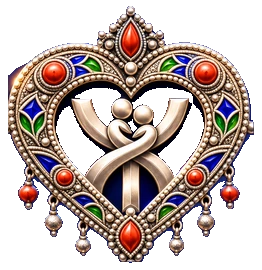
Silver, enamel and coral: these three materials are the signature of Ath Yenni jewellery, an Amazigh craft from Upper Kabylie. Here is what to look for.
Cloisonné enamel
Fine silver wires soldered onto the piece form small compartments. Enamel powder is placed inside, then melted. Once cooled, the enamel turns bright and glossy. Green, yellow and blue dominate: popular belief links them to earth, sun and sky.
Red coral
Mediterranean coral is set into the chiselled silver. Its red answers the colours of the enamel.
Ath Yenni or Béjaïa?
Ath Yenni pieces are enamelled. Those from Lower Kabylie, around Béjaïa, are generally without enamel, with discreet coloured stones.
The names of the pieces
The abzim is the large chest piece at the centre of the set. The avruch is a pin brooch, the ikhelkhalen are anklets, and the taessavt is the diadem. Spellings vary from one region to another.
A jewel passed down
These pieces go with the Kabyle dress and with festive days. They are often passed from mother to daughter, and the bride wears them on her wedding day.
Before you buy
A handmade piece shows slight differences in colour and detail: that isn’t a flaw. Ask where and by whom it was made. The pieces in the Jewel Box are made in Ath Yenni by the village’s jewellers.
See the Jewel Box jewelleryThe Gallery